About Riskwright
Built by underwriters who believe the data should do the talking.
Founded in Atlanta in March 2023 by a reinsurance analyst and an atmospheric scientist who kept arriving at the same conclusion: in agricultural drought, the data already knows. The adjuster is a delay, not a safeguard.
Patrick Durand spent eight years as a reinsurance analyst at a global re/insurance group, modeling catastrophe exposures across Southeast US agricultural portfolios. The problem he kept seeing: farmers would suffer a clear drought year — measurable in every dataset — and spend the following winter in claims disputes with adjusters who'd never walked their fields.
In 2021, Patrick began working with Dr. Sena Adeyemi, a climate scientist at Georgia Tech studying NOAA precipitation anomaly patterns in Southeast US growing regions. Their research kept returning to the same observation: for agricultural drought specifically, the SPI-3 index correlates strongly enough with yield loss that it could serve as a policy trigger in its own right.
The adjuster is a symptom of the problem, not the solution. When the index moves, the money should move.
They brought in Marcus Webb, a fintech payments architect, to solve the wire transfer mechanics. Riskwright was incorporated in Atlanta in March 2023. The first policy was bound in September 2023 — a cotton operation in Tift County, Georgia. The first trigger event occurred in August 2024. Payment arrived before the client called to check on it.

The team.
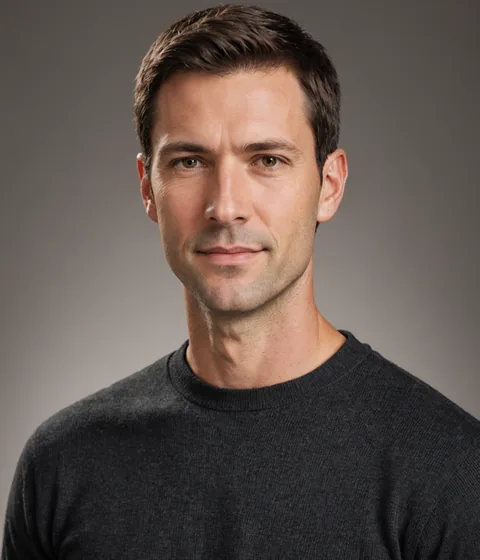
Former reinsurance analyst with 8 years modeling Southeast US agricultural catastrophe portfolios. Led development of Riskwright's trigger calibration methodology and client underwriting process.
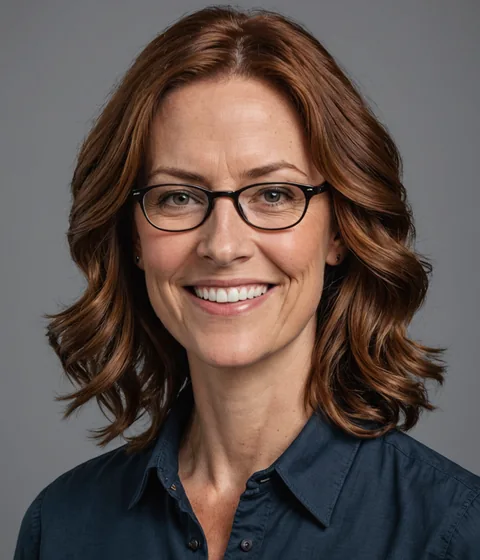
PhD in Atmospheric Sciences, Georgia Tech. Published researcher in Southeast US precipitation anomaly patterns and PRISM grid methodology. Leads data source validation and trigger index development.

10 years in fintech payments infrastructure and insurtech product development. Architected Riskwright's automated settlement engine and Policy Portal. Leads policy structure and client onboarding.
Operating principles.
Every trigger, every threshold, every payout is determined by publicly archived data that both parties can independently verify. We do not accept or issue coverage that requires human judgment about what happened. The instrument panel is the referee.
A payout that arrives six months after a drought year is a different product than one that arrives in 72 hours. Speed determines whether coverage actually helps an operation survive a climate event — or merely helps it rebuild later. We are in the business of real-time financial resilience.
Before binding any policy, we show the client the full historical performance of the proposed trigger: how often it would have fired, what the correlation to actual losses was, and what basis risk looks like. A client who understands the tradeoffs is a client who trusts the product.
1180 Peachtree Street NE, Suite 2400
Atlanta, GA 30309
+1 (404) 555-0127
[email protected]
Atlanta sits at the center of the Southeast agricultural corridor — the highest-drought-frequency region in the continental US by SPI-3 anomaly frequency since 1990. Our reference station network anchors in the Tift County, Anson County, and Edgefield County corridors that define our core book of agricultural coverage. Atlanta's established reinsurance and E&S insurance cluster provides the panel reinsurer relationships and regulatory infrastructure that a growing parametric underwriter needs early. 1180 Peachtree puts us in Midtown's fintech concentration — the talent base for the settlement engine that makes 72-hour payout structural rather than aspirational.
We underwrite climate risk. We don't broker it.
Riskwright does not sell coverage through agents or brokers. If you're an agricultural or infrastructure operator with direct weather exposure, reach us directly. If you're exploring the team as a place to build, we're growing selectively.