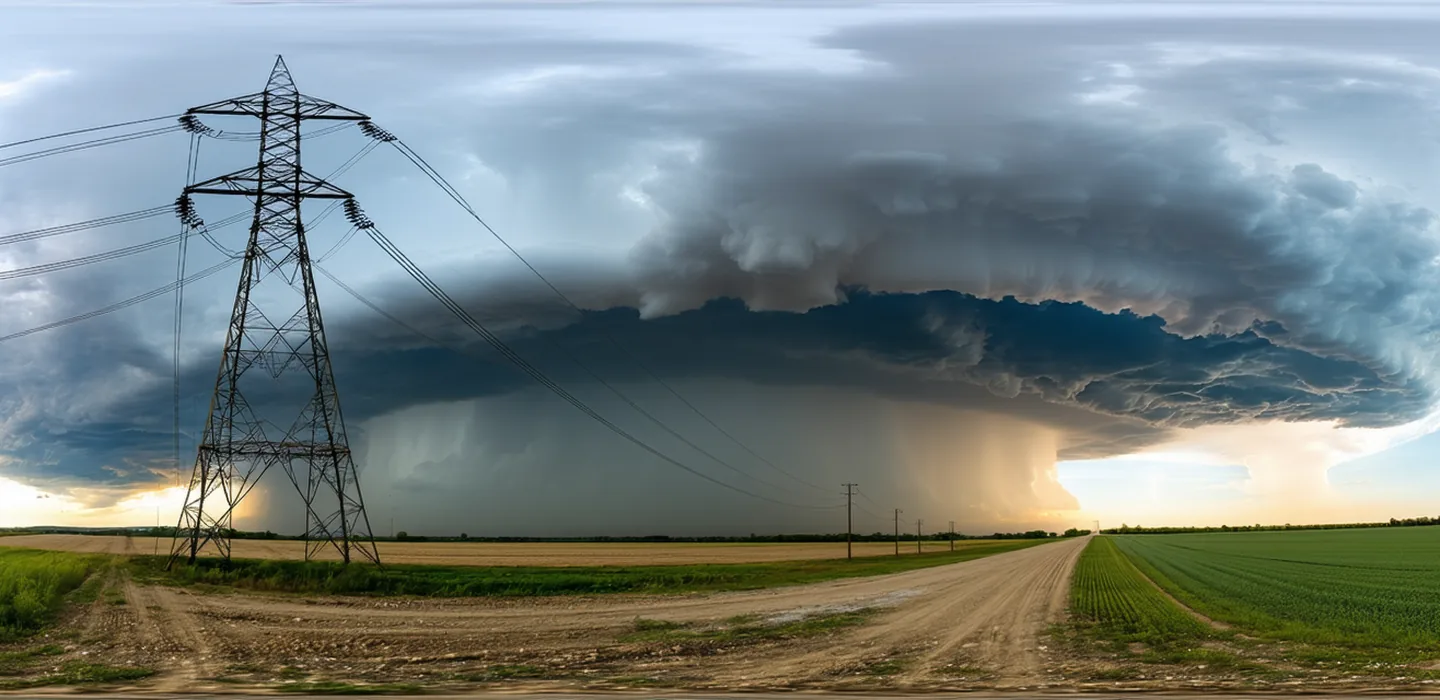
Weather triggers for utilities, networks, and energy projects.
Wind speed exceedance, ice accumulation, atmospheric river events — Riskwright parametric policies pay on observed atmospheric conditions, not on assessed structural damage.
Infrastructure operations with measurable weather exposure.
Electric utilities
Transmission and distribution operators with wind, ice, and storm exposure. Wind speed exceedance and ice accumulation triggers cover the primary drivers of emergency restoration spend. Municipal co-op utilities serving rural territories also face heat stress demand surges in summer — temperature exceedance triggers can provide spot power purchase cost support when base load generation falls short during extreme heat events.
Renewable energy projects
Wind farm and solar project developers with revenue tied to resource availability. Wind speed deficit triggers provide cash flow support during low-resource periods, protecting debt service coverage ratios (DSCR) under project finance agreements. Payment arrives within 72 hours of trigger confirmation — before a quarterly DSCR covenant review, not after an annual settlement.
Transportation networks
Road and bridge operators facing elevated maintenance spend in severe winter weather. Ice accumulation and freezing rain triggers cover the events that drive the largest unbudgeted maintenance cycles.
Natural gas infrastructure
Pipeline and distribution operators with weather-correlated demand spikes or operational constraints. Temperature exceedance and cold snap triggers align with the primary stress events for gas networks.
Telecom infrastructure
Tower operators and wireline networks with severe wind and ice exposure. Trigger structures can be customized to match the wind load design specifications of specific tower types and regions.
Infrastructure lenders
Project finance lenders with loan portfolios concentrated in weather-exposed infrastructure can use parametric structures to hedge portfolio-level climate exposure without modifying individual loan terms.
Atmospheric metrics for built environment risk.
Wind Speed Exceedance
Sustained · 3-second gustMeasured as either sustained wind speed (10-minute average) or 3-second gust at a designated ASOS station. The threshold is set to align with the wind speed at which the insured's infrastructure experiences elevated operational or structural stress — not a round number. Multiple threshold tiers with proportional payouts are available.
Typical application: Transmission line emergency spend, wind project revenue shortfalls, tower maintenance.
Ice Accumulation
mm of freezing rainFreezing rain accumulation in millimeters, measured via surface observation or ASOS present weather sensor during a defined storm window. Particularly relevant in the mid-Atlantic, Southeast, and Great Plains regions where ice events drive disproportionate infrastructure failure rates relative to their frequency.
Typical application: Road maintenance cost spikes, distribution line failure events, railroad operational delays.
Atmospheric River
72-hour precipitation totalCumulative precipitation over a 72-hour window exceeding a set threshold in millimeters. Designed for infrastructure exposed to concentrated rainfall events that generate runoff rather than prolonged drought. Particularly relevant for stormwater infrastructure, coastal flood protection systems, and road drainage. Referenced against NOAA ASOS precipitation accumulation or USGS stream gauge stage readings where riverine response is the relevant trigger mechanism.
Typical application: Stormwater operations, coastal infrastructure, riverine flood protection assets.
Capital Project Parametric Wrap
Workday loss · Excess weather daysStructured for highway contractors, utility construction projects, and infrastructure capital programs with weather-sensitive project schedules. The trigger measures excess workday loss — days where precipitation exceeds a threshold, temperature conditions trigger OSHA heat protocols, or wind exceeds safe working limits — against the contractual weather day allowance. When actual weather days exceed the contract allowance, the parametric wrap pays within 72 hours, providing liquidity during project delay periods while contract extension requests are being processed.
Typical application: Highway and bridge construction, utility line installation projects, renewable energy facility development.
Describe your infrastructure exposure. We'll design the trigger.
Contact our underwriting team with your asset type, geography, and primary weather concern. We return with a proposed trigger structure and indicative premium within two business days.
Request underwriting review