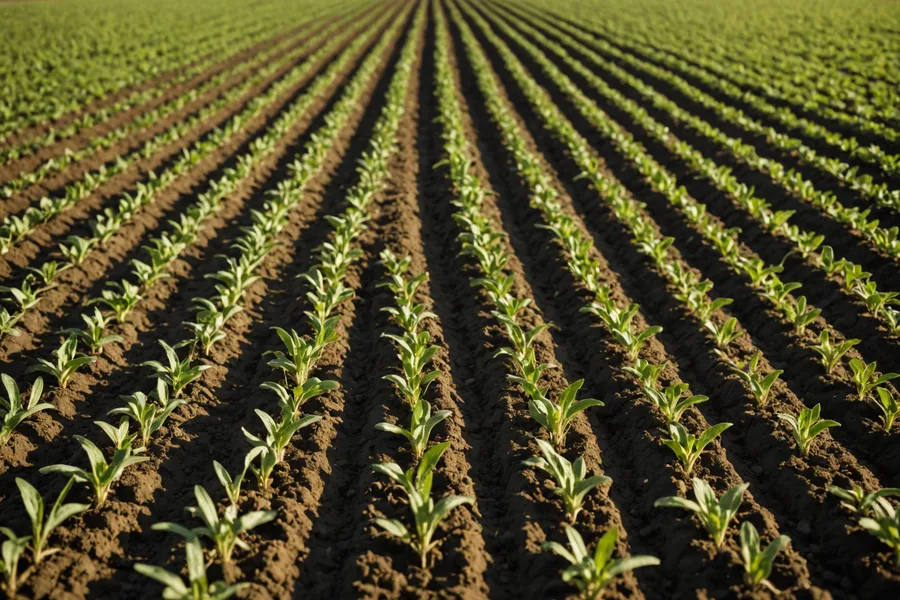
Parametric coverage for the growing season is not a one-size product. The right policy for a 2,000-acre corn operation in southwest Georgia has different window timing, different trigger metric, and different limit sizing than the right policy for a specialty vegetable operation in eastern North Carolina or a winter wheat operation in western Tennessee. This guide walks through the four core decisions — coverage window, trigger metric, threshold, and limit — with the crop-specific reasoning behind each.
Decision 1: Define Your Coverage Window
The coverage window specifies the date range during which the trigger index is monitored. Payout triggers only if the index crosses threshold at least once within this window. The window must be fixed at policy binding — it cannot be adjusted after the season begins.
Window design is fundamentally a question about when drought stress matters most to your yield outcome. For the major row crops in the Southeast:
Corn: The critical stress period runs from approximately V6 (6-leaf stage, early June in Georgia) through the dough stage (late August). Drought during pollination — typically the first two weeks of July in most Southeast counties — is particularly damaging. A standard coverage window of June 15 through August 31 captures this critical period. Some operations in southern Georgia with earlier planting dates may benefit from an earlier window start of June 1.
Cotton: The squaring and boll development period from early July through mid-September is the primary drought-sensitivity window. A July 1 through September 15 coverage window covers most of this period. For operations in coastal South Carolina where the heat and humidity profile differs from the interior Piedmont, the window may extend to September 30 to capture late-season boll filling stress.
Soybeans: The reproductive stages R1 through R6 — flowering through full seed — run approximately July 1 through September 15 for most Southeast plantings. This closely mirrors the cotton window, and soybean-cotton mixed operations can often be covered under a shared coverage window with a single policy.
Winter wheat: The drought sensitivity pattern for winter wheat is different from summer row crops. Establishment and early tillering in fall (October–November) is sensitive to precipitation deficit. The grain fill period in April–May is also critical. A two-window structure — one fall window October 15 through December 31, one spring window April 1 through May 31 — is more appropriate than a single growing-season window.
Decision 2: Select Your Trigger Metric
For most Southeast row-crop operations, SPI-3 is the appropriate primary trigger metric. It is the WMO-endorsed drought monitoring standard, computable from publicly archived NOAA Co-op precipitation data, and shows the strongest historical correlation with yield anomaly in our Southeast portfolio analysis. Its standardization against the local historical distribution means an SPI-3 threshold of -1.5 represents the same relative drought severity whether the operation is in the wet Coastal Plain or the drier Alabama Black Belt.
PDSI (Palmer Drought Severity Index) is worth considering as a secondary metric for operations where temperature-amplified drought stress is a significant concern. Specialty vegetable operations, orchards, and wine grape vineyards — crops where heat stress compounds the yield impact of precipitation deficit — may show stronger loss correlation with PDSI than with SPI-3 alone. Dual-index trigger structures (requiring both SPI-3 and PDSI to breach threshold) reduce upside basis risk at the cost of modestly lower trigger frequency.
Precipitation deficit percentage — actual rainfall as a percentage of the 30-year PRISM normal — is a useful supplementary metric for operations where total precipitation volume matters more than its anomaly relative to historical distribution. For irrigation scheduling purposes, deficit percentage is more directly interpretable than SPI units. For parametric trigger purposes, SPI-3 is generally preferred because it accounts for seasonal variation in the historical baseline.
Decision 3: Calibrate Your Threshold
Threshold calibration balances two competing objectives: capturing real drought events (lower threshold = more sensitive = higher trigger frequency) and avoiding false positives (higher threshold = fewer triggers = higher confidence of meaningful damage). The right position on this curve depends on your financial structure.
Operations with significant operating loan obligations — input costs financed through a line of credit that comes due at harvest — generally benefit from more sensitive thresholds. Getting cash in hand during a dry summer, even in a year where actual loss turns out to be moderate, is valuable when the alternative is drawing down a line of credit or selling assets to service the loan before harvest. The premium for a 10th-percentile threshold versus a 7th-percentile threshold is meaningful but often justified by the cash flow benefit.
Operations with stronger balance sheets and bridge financing capacity — or those primarily using parametric coverage as a complement to a robust MPCI program — can often afford a more conservative threshold at lower premium cost. The parametric policy is activated only in genuinely severe drought years, where basis risk (the chance of a real loss without a trigger) is lower because the drought is severe enough to register unambiguously at the reference station.
Request a backtesting report showing trigger frequency at multiple threshold levels before making this decision. The report should show year-by-year trigger determinations for the historical record, not just a summary frequency. Reviewing which specific years triggered and which did not — and comparing to your own recollection of those growing seasons — gives a concrete sense of whether the threshold is calibrated to events that actually affected your operation.
Decision 4: Size Your Coverage Limit
Coverage limit is the fixed amount paid when the trigger fires. Because parametric pays a predetermined amount rather than a damage-proportional amount, limit sizing requires different thinking than MPCI coverage level selection.
The most useful framing: size the parametric limit to the specific financial need it is designed to address, not to the maximum conceivable loss. For most operations using parametric as a cash flow bridge alongside MPCI, the relevant figure is the sum of: operating loan service obligations that fall due before MPCI claim settlement arrives, input cost deposits for the following season that must be committed in fall, and any other hard cash obligations that cannot be deferred during the post-harvest period.
A practical example: a Colquitt County corn operation with $80,000 in fall loan service obligations, $45,000 in spring input deposits due in November, and a 3–4 month expected MPCI settlement timeline might size their parametric limit at $125,000–$150,000 — sufficient to cover the immediate financial gap with a modest buffer. A policy limit far above this figure provides premium-for-premium less efficient coverage; the excess limit above the cash flow need is effectively the same as leaving premium on the table.
Renewal and Annual Review
Parametric coverage is not a set-and-forget product. Annual renewal is the opportunity to review three things: whether the reference station's data quality and record length have changed, whether the historical threshold percentile has shifted after another year is added to the distribution, and whether your operation's financial structure (loan obligations, input costs) has changed enough to justify adjusting the coverage limit.
Coverage window timing is also worth reviewing annually in light of the previous season's experience. An operation that experienced drought stress beginning earlier than the policy window's start date has concrete evidence for extending the window start at next renewal. We provide this analysis as part of our standard post-season review for all active policyholders.